The historical Russian folk costume
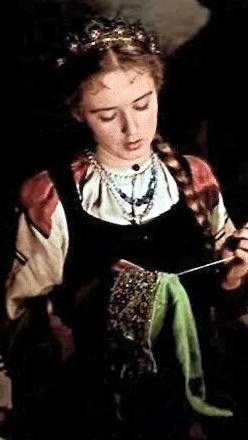
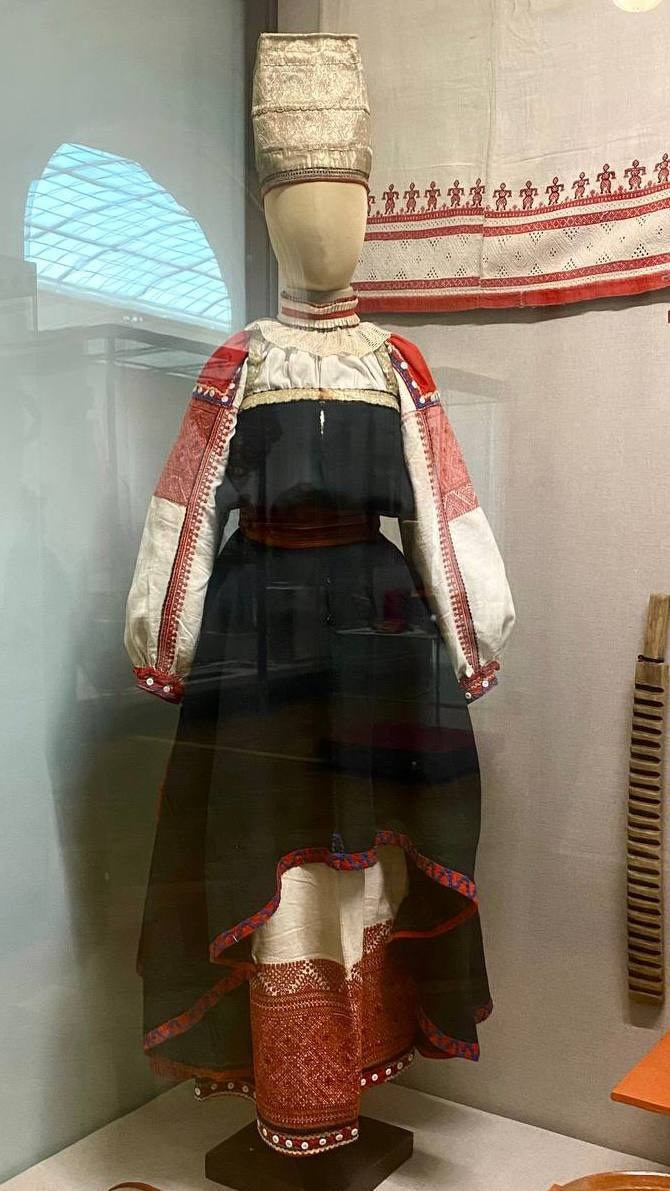
I have chosen to replicate is a festive costume of a young woman from the Kursk Governorate, Korochansky District, the village of Sagaidachnoye, dating from the late 19th to early 20th centuries. Portrait of the costume’s owner.
The wearer of this costume came from an Old Believer family, most likely a peasant from a merchant or petty‑bourgeois class. She was unmarried, which can be inferred from the absence of a poneva and from the fact that her hair is left open at the back.The owner of the costume belonged to the Great Russians, who lived mainly in the territories of the Grand Duchy of Moscow, in the southwest of the Russian Empire. The Korochansky District, from which the peasant woman hailed, had a population of 159,024 in 1914.The Great Russians, who descended from the ancient Russian people of the 5th–12th centuries, were tall, fair‑haired, and gray‑eyed in appearance.
Components of the costume:
• shirt
• sarafan
• sash
• kokoshnik
• bast shoes
Features
Southern clothing is more archaic in terms of cut and materials than northern clothing, and the Kursk Governorate was also extremely fertile, so the materials for making clothing were produced locally. To make bast shoes, they used linden bast, kruttsa (hemp rope), and for the fiber — natural fabrics such as linen, cotton, and hemp fabric, which were dyed with natural dyes.
Sundress
The sarafan was most likely sewn from blue cotton‑cotton fabric, with a straight cut, on straps, and it was a split‑front sarafan — that is, it was made from a single piece of fabric folded in half. The neckline was cut along the fold, and several wedges were inserted on the sides. Such sarafans were simple in cut and were made from homespun fabric — canvas, fine cloth, or wool. Along the hem, neck, and armholes, they were decorated with pieces of bright red cotton fabric. The gored black sarafan was called a “sayan.” It was a round peasant sarafan made of printed canvas, tied with a kushak — a homespun woolen belt.
A shirt
Выходная рубаха (чаще всего, украшенная узорными вставными полосами, вставками кумача, тесьмой) называлась — подносок. Обшитый снизу нитями с геометрическим узором, он передает тонкое искусство курских мастериц. Рукава покрыты полосами с орнаментами, перекрывающими шов и делающими его незаметным.
The upper part of the shirt was called “stanushka.” It was made of thin, lightweight fabric. The lower part was called “podstava, ” and it was made of coarse material. Festive shirts were most often sewn from linen canvas, calico, silk, muslin, маркизет, and mitakl. The poliki (shoulder inserts, which in this costume are not slanted but straight, indicating that the woman is not married) and the gussets made of red cotton, as well as the hem of the shirt, are made using the technique of warp weaving and multi‑pair weaving from flax, wool, and cotton.At the top, the hem is decorated with a visor — a large, straight, stiff collar that combines lace and fabric bound with a red stripe.
The kokoshnik
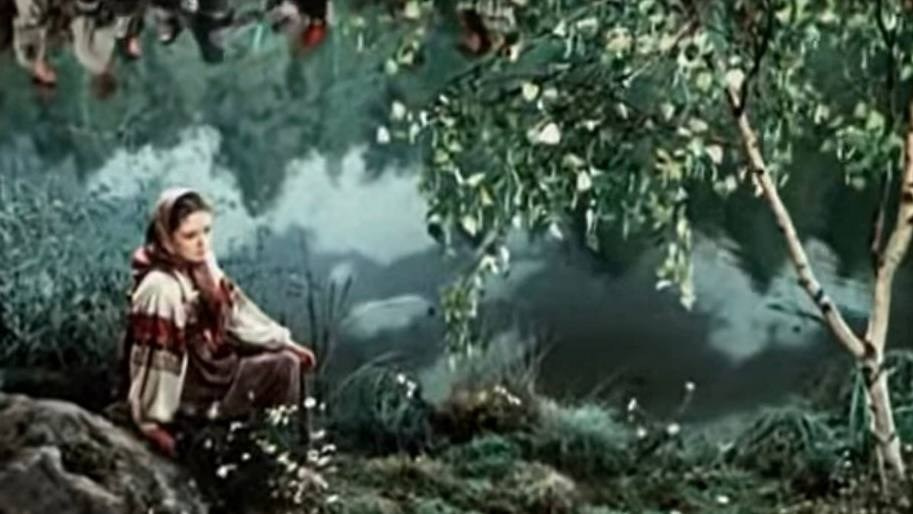
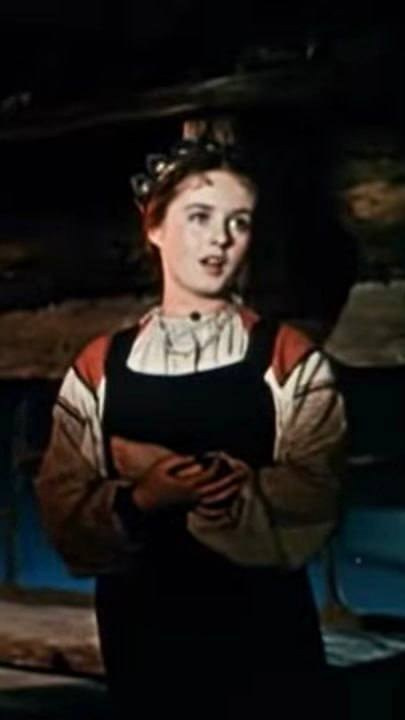
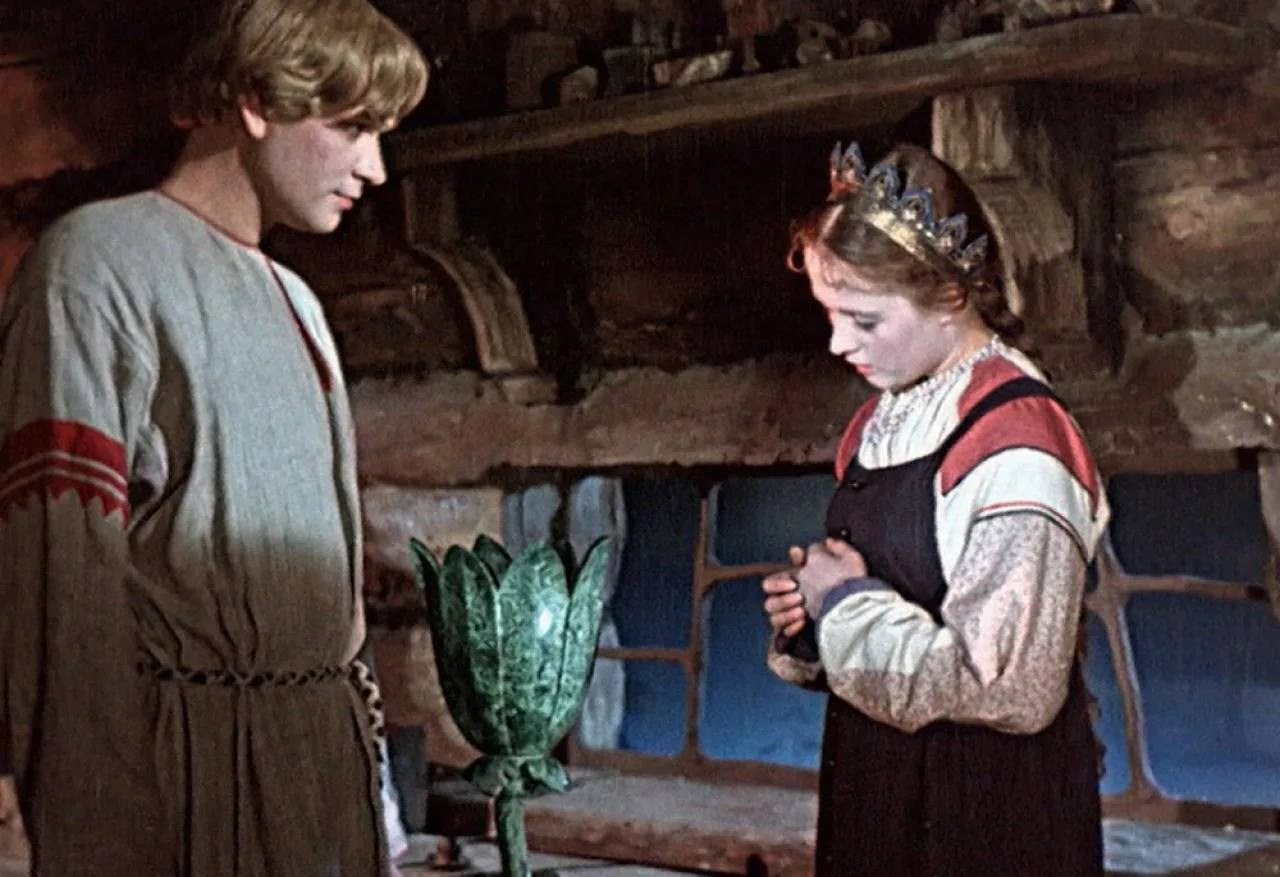
The headdress is represented by a kokoshnik, a cylindrical cap with a flat bottom. It was very heavy, so it was worn only on festive days. The kokoshnik’s decoration consisted of glass beads, gold braid, and river pearls. Most often, bast shoes with onuchas or oboriki, cats, slippers, or leather shoes were worn on the feet. An analogue of the costume I chose in cinema is Katya’s festive costume from the 1946 film “The Stone Flower”. The costume designer is Olga Semyonovna Kruchinina — the most authoritative costume designer in Russian cinema, who established the Costume Designer’s Workshop at VGIK.
The film was created over a period of seven months. The costumes and sets were made at the Barrandov Studios in Prague, where Ptushko was sent as part of the “resurrection team” immediately after the nationalization of Czechoslovak film production on August 11, 1945.
“It would seem that its fairy‑tale texture pushed the artist towards the most exuberant use of colour. We were aware of this danger and tried to overcome it by subordinating the use of colour to strict artistic goals, drawing material for solving these problems from the work of our famous masters — the Peredvizhniki. We carefully studied the techniques of their painting and tried to find an adequate expression of the aesthetic essence of the best Peredvizhniki paintings in cinema.” The emergence of colour cinematography was accompanied by an exaggeration of colour in films, ” wrote A. Ptushko.
Thus, both costumes — the one I chose and the one featured in the film — are made in dark, restrained tones and do not stand out for their variety of colors, embroidery, or lace.
The role of Danila the Craftsman’s bride, Katya, was played by 19‑year‑old VGIK student Ekaterina Derevshchikova, who studied in the class of Sergei Gerasimov and Tamara Makarova. Young, unmarried, with light brown hair, fair skin, and light‑colored eyes, she perfectly matches the image of the wearer of the costume I chose to replicate.
Both costumes also feature red shoulder patches on the shirt sleeves with hand‑embroidered designs running along them. The black sundress is long, reaching the floor, and has a fastening at the front.
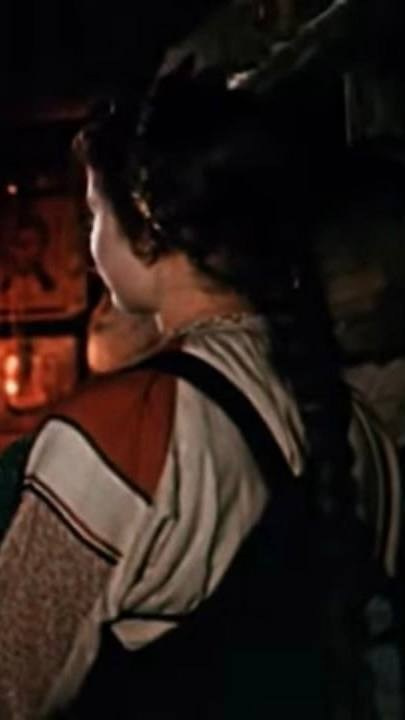
The differences lie primarily in the design of the sundress. While the costume I chose had a simpler shape, the film shows that the straps are connected at the back using a complex “frog” fastening. However, the complexity of my sundress is evident in its detail: it features gold braid along the edges of the upper part of the sundress and on the straps, whereas the second sundress does not have these.
An equally important difference between the two costumes is the headdress. If in my costume it is a massive, elongated kokoshnik, then in the film, instead, there is only a simple, narrow headdress, or even just a scarf.
Thus, the costumes are similar in terms of their character, the textures used, and the stylization, but they differ slightly in shape and the degree of detail. It can be concluded that the costume depicted in the film is not an exact replica of its historical source — the festive costume of a young woman from the Kursk Governorate.
Articles

One’s attitude toward the body as an interaction with the world




The book that brought together nearly half a century and described almost the whole truth