The costume of the Renaissance era in the 16th century. Features.
European clothing of the 16th century was ornate and multi‑layered.
Elements of the costume.
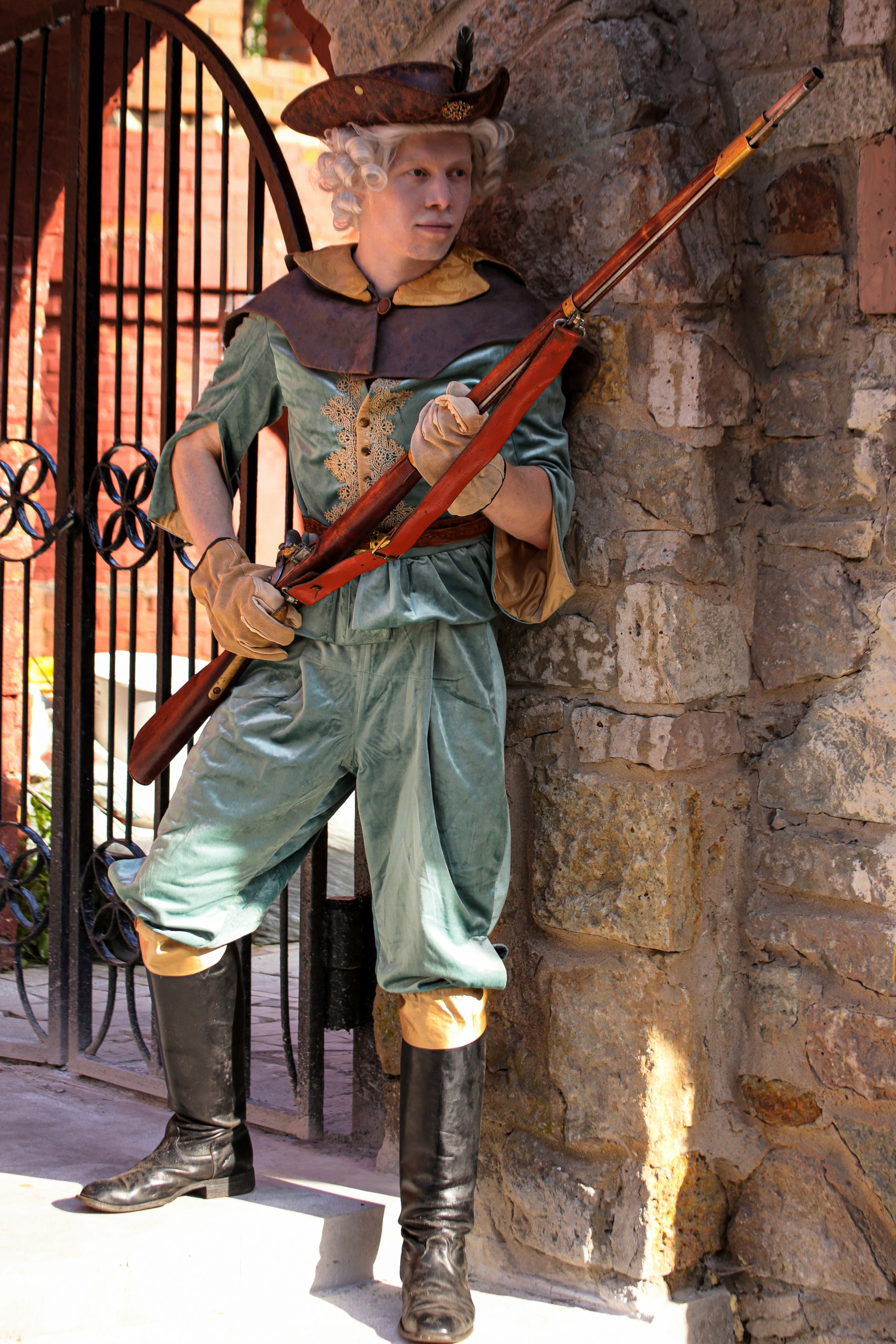
Men’s clothing in 16th‑century European countries most often included the following elements:
· a doublet. It was an outer garment;
· a coif. This was a sleeveless jacket that was fitted and had cut‑outs. The coif was fastened at the neck (later, it began to be fastened at the waist);
· a panseeron. This was a variant of the doublet, distinguished by a protruding peak above the waist;
· pludres. These were short trousers with vertical slits. The features of women’s clothing in the 16th century were as follows:
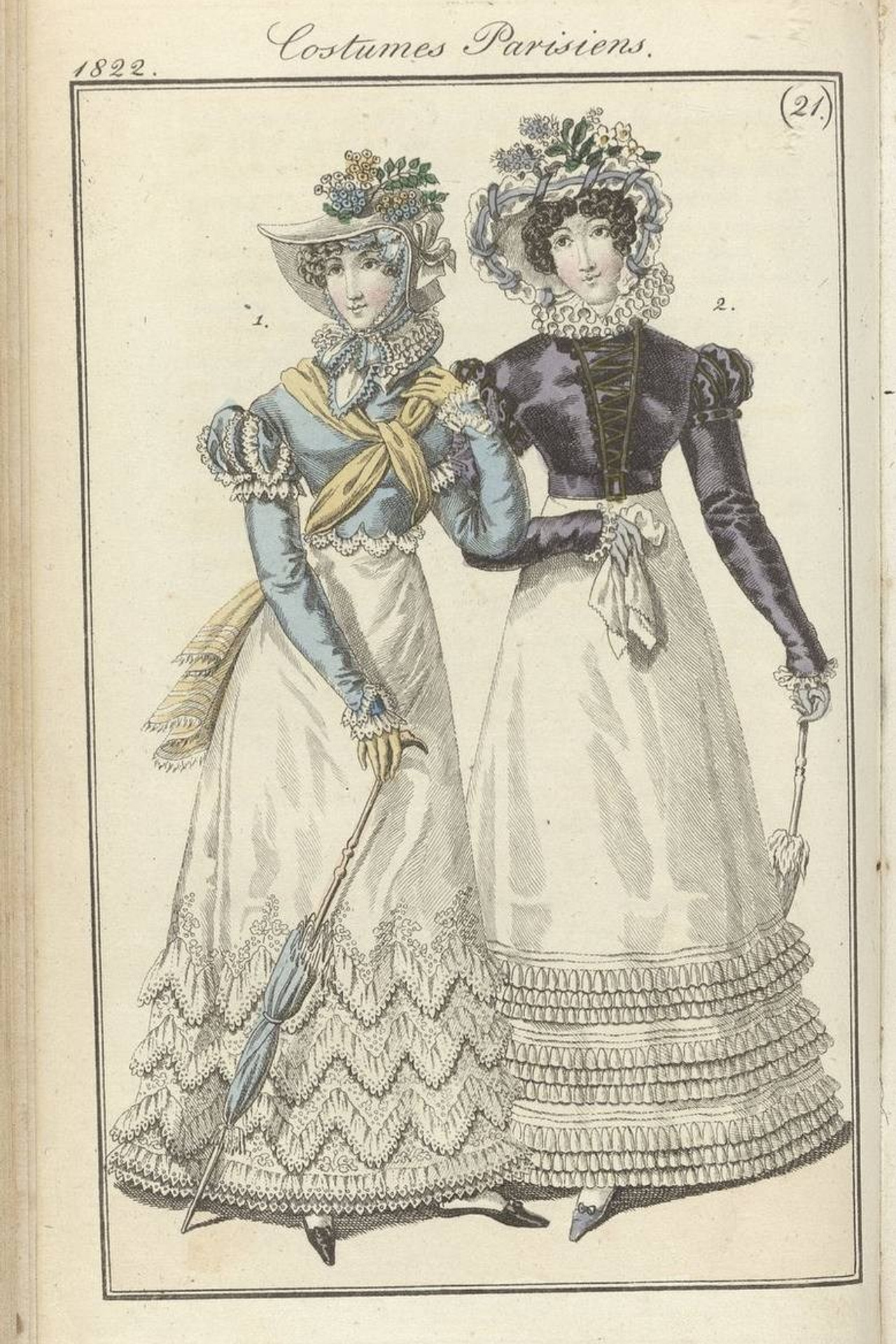
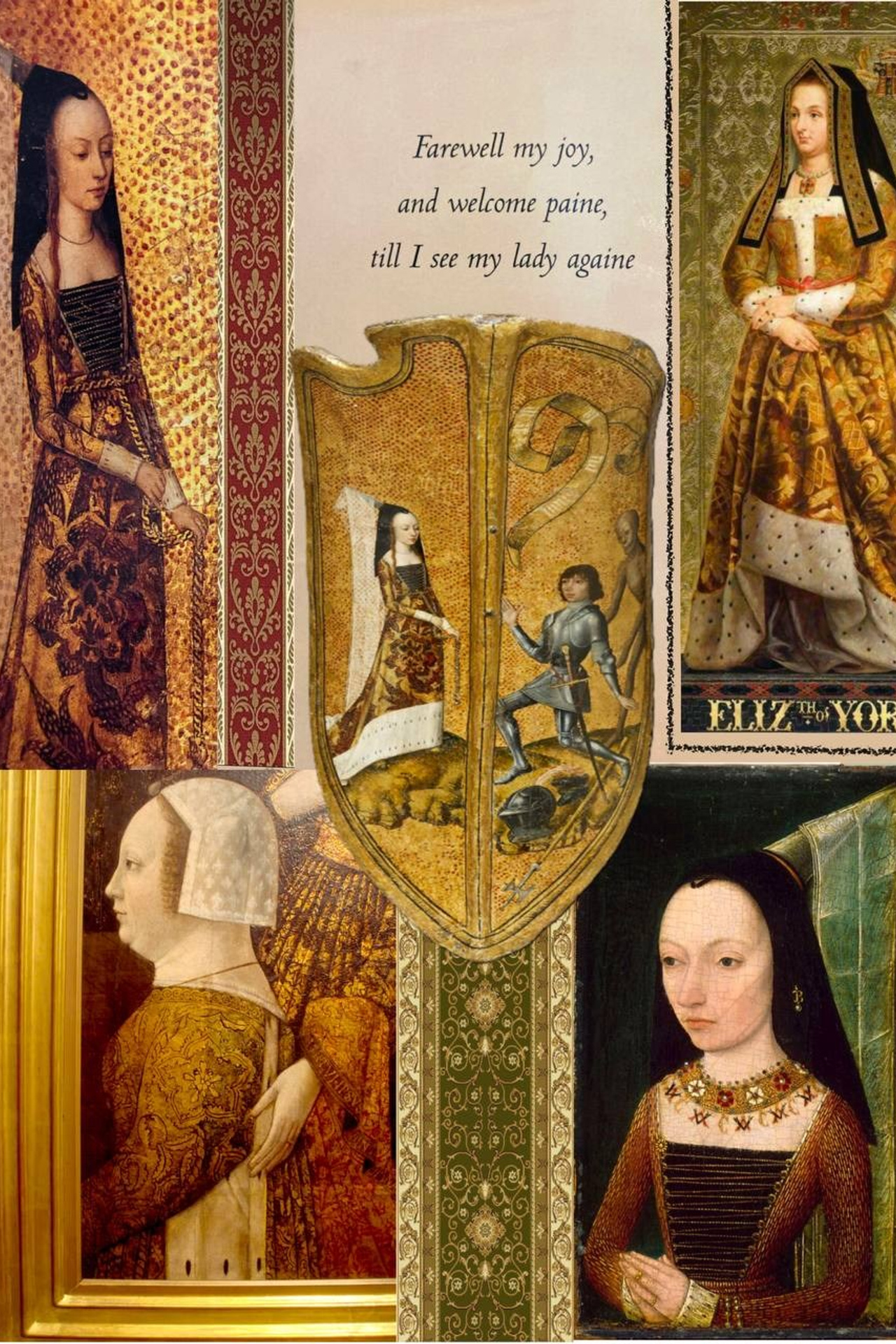
· dresses had full skirts;
· the cotte was made of patterned fabric, and its style could be combined;
· large collars were common;
· headwear included barrettes with brims, wigs, and hats. Features of Renaissance costumes in various countries,
France
The costumes of wealthy Frenchmen were made from expensive fabrics — velvet, brocade, silk, and wool — and were decorated with pearls, gold, and silver embroidery. Embroidered white men’s shirts became fashionable; long hose (trousers and stockings) were replaced by upper short, wide trousers (“a-de-chausses”), gathered at the bottom with a cord, and long stockings (“ba-de-chausses”). The décolletage disappears, and a high standing collar appears; the cuffs expand, and the “fraise” — a round, white, starched pleated collar borrowed from the Spaniards — becomes more prominent. The pourpoint begins to be made on a frame. French court ladies started using the “vertugad” — a lower funnel‑shaped skirt made of dense, stiff fabric, into which metal hoops were sewn.
In the first half of the 16th century, the French wore shoes with wide, blunt toes (“bear’s paw”), decorated with slits and embroidery. In the 1440s, lightweight shoes with slits appeared. The French nobility wore ornate shoes made of silk and velvet. In the 16th century, boots were without heels and had soft soles. By the end of the century, men’s shoes acquired heels, and the toes began to be decorated with rosettes. Women’s footwear also began to feature a small heel. Women wore soft, closed shoes. Later, in the 1980s, Italian backless shoes with high wooden soles came into fashion.
In the 16th century, men wore short haircuts, which were complemented by beards and mustaches. The headdress of noble Frenchmen was the “baret” — a large circle of fabric sewn onto a stiff rim and connected to small brims. The brims of the baret were decorated with pearls, buckles featuring precious stones, and white ostrich feathers. Later, the male headdress became the female toque. French ladies used white makeup, rouge, and perfume. Fashionable jewelry included pearl necklaces and long decorative belts, fans decorated with embroidery, and gloves with precious stones. Wallets, framed mirrors, onion‑shaped clocks, and “flea traps”—elegant precious boxes with a small opening—were worn on the belt.
Germany
The German costume was brighter than the French and English ones, which had softer and lighter tones. At the beginning of the 16th century, men’s clothing still retained Gothic features: elongated proportions, tall headgear, and shoes with long toes. But soon men’s clothing became looser. Long hose‑trousers split into two parts — an upper and a lower one. The front parts of these trousers were richly decorated with decorative slits. The upper garment was a “vams, ” corresponding to the French pourpoint or the English jerkin. The shirts were gathered at the chest into small folds and tied at the neck.
The ceremonial male attire of German feudal lords and prominent burghers was the “shaube”. Wealthy, noble Germans flaunted the “faltrök”. Initially, it looked like a pleated skirt that was worn over a vambrace. At the very end of the 15th century, the faltrök was worn over plate armour. Later, the faltrök was combined with a bodice. If the vambrace had sleeves, it was paired with a sleeveless faltrök, and vice versa.
The women’s costume of the first third of the 16th century had such a narrow bodice and narrow sleeves that the figure appeared swaddled. Women wore shirts made of fine linen with an embroidered standing collar and two skirts — one over the other, often with a long train. The rich ceremonial costume was most often made of red velvet; the bodice was decorated with embroidery, and the long skirt, reaching all the way to the floor, with a train or trimmed at the bottom with wide strips of velvet, fell in vertical tubular folds. Decency required that the feet should not be visible.
Until the mid‑16th century, men wore flat shoes with wide, short toes and a slit on the side. The Germans called this style “Kuchmeiler” — “cow’s muzzle” or, alternatively, “bear’s paw” or “duck’s beak”. The Germans wore these wide‑toed shoes with striped stockings. In the second half of the 16th century, pointed‑toe shoes with slits came into fashion. And at the end of the century, heels and a stiff sole appeared.
Hairstyles and hats gradually changed along with the costume in the 16th century. Instead of the long curls that men wore at the very beginning of the 16th century, a short straight haircut (“kolbe” — “cropped head”) appeared. and sideburns. The man’s head was covered with large flat baretas.
Italy
In Italian clothing of this period, features of antiquity are noticeable: simplicity and gentle fluidity, freely falling folds. Horizontal lines become the main ones, rather than vertical ones; excessively long trains and sharp, long shoe noses, drooping sleeves, deep necklines, and high headdresses disappear.
The lower garment worn by Italians was a shirt — a “camicia, ” and tight trouser‑tights called “calzoni.” The upper garment for men was a cloak. During holidays, young Italians would put on a “giorne.” Luxurious giornes were made from expensive velvet and brocade fabrics; the bottom of the sleeves was trimmed with fur, rows of ecrevisse, and decorated with bells and feathers. In the 16th century, men’s costume changed. The main types of men’s clothing from this period were the caftan with a square neckline, which was called the “royal mirror, ” and the open caftan with a stand‑up collar. Beneath the neckline of the “royal mirror, ” a white shirt adorned with rich embroidery was visible. The caftans were made of fabric in deep, dark colors and decorated with gold embroidery. The upper garment for men in the 16th century was the “gipon” (it corresponded to the French pourpoint).
Women’s clothing was loose and fell softly, accentuating the body’s curves. In the 16th century, women’s underwear and stockings appeared for the first time. Black half‑masks also came into fashion; women put them on when going out — partly to avoid being recognized. This was a privilege of the nobility. Gloves and handkerchiefs became an essential part of a noble lady’s outfit. The gloves were made of fabric and decorated with embroidery and precious stones. Handkerchiefs were also embroidered and decorated with lace. Italian ladies hung small pouches for keys and money from their belts. The costume was complemented by a fan. In winter, Italian women warmed their hands in mufflers, which were made of silk and trimmed with fur.
In the 15th century, Italians wore soft shoes, sandals, and soft high boots that fastened with laces. The toes of the shoes were rounded. In the 16th century, footwear was soft, without heels, and decorated with slits. Men’s headwear was very diverse: hats with brims, turban‑type headbands, small round caps, hoops, and hoods. Italian women considered a high forehead to be beautiful, so the hair above the forehead was shaved to the width of two fingers. Women’s hairstyles were sometimes very complex and represented an exquisite combination of braids and curls, adorned with pearls, veils, and ribbons. Married women wore hats in the form of a turban (a soft, pillow‑shaped form). Girls adorned themselves with veils and nets woven from cords (often gold).
Spain
The Spanish suit was stiff, concealed the body’s shapes, and subordinated them to a strict scheme. It wasn’t as democratic as the Italian one, but it emphasized class affiliation.
In the first half of the XVI century. the men’s costume consisted of a shirt (kamisa); stockings sewn to the shape of a leg (long johns of short trousers); a narrow vest — “corpesuelo”, worn over a shirt, to which long johns were tied with ribbons. The outerwear was a special type of jacket — “hubon”, which at the beginning of the 16th century looked like an Italian jubbone. By the middle of the 16th century, the men’s costume had changed. He turned into an armor suit, reminiscent of knightly armor. It was a kind of tribute to the memory of the heroic deeds of the Reconquista era — the struggle against the Moors. The Spanish costume embodies the ideal of a warrior. The cloak was the main outer garment of the Spaniards. The sword, dagger, and gloves were still essential accessories of the male costume. Because of the cushion‑like trousers, the sword had to be attached almost horizontally.
The 15th‑century women’s dress is characterized by a sharply accentuated waist. Radiating from it upwards and downwards, the ray‑like folds made the figure particularly slender. The dress had a cape on top. The bodice of a 16th‑century women’s dress was made on a dense framework. Cleavage (usually square) was covered with an embroidered insert. The underskirt, known as “verduutos, ” was tightly stretched over a frame. The dress was complemented by a collar — initially in the form of a narrow ruffle, and later, by the end of the 16th century, a ruffled one. Another formal women’s costume was the “ropa” — an upper garment with short or long sleeves that was worn over the dress.
In the first half of the 16th century, men’s footwear consisted of soft shoes made of coloured leather or velvet, without heels and with wide toes (“bear’s paw”). Spanish women wore shoes made of soft leather, velvet, or agras, decorated with embroidery. By the end of the 16th century, women’s footwear began to feature heels. Among Spanish women, it was considered unacceptable for even the toes of shoes to be visible under the skirt. However, this did not apply to shoes with thick wooden soles — “chapines”. The more noble the lady, the thicker the sole of the shoe, and the foot could be visible almost up to the ankle.
Spaniards of the Renaissance era wore short haircuts, beards, and mustaches. Until the mid‑16th century, their headwear was a beret with a stiff brim. Later, it was gradually replaced by a stiff, tall hat with narrow brims. The hat was richly decorated around the crown. Women’s hairstyles were simple and strict. Most often, the hair was combed with a straight parting, with strands hanging along the cheeks, and at the back it was pinned into a chignon. This hairstyle was called a “bando.” Another headdress, the “cofía de papos, ” was worn only by women. It was made of thin white linen and consisted of two parts. Noble Spanish women wore a “vespayo, ” made of thin, sheer white fabric that covered the head and forehead and hung down over the shoulders at the back. This veil was held in place on the head by a metal circlet adorned with jewels. Veils made of lightweight fabric were a common headdress for women of all classes. They were draped over the head, covering the shoulders and enveloping the entire figure, reaching almost to the floor.
Articles


One’s attitude toward the body as an interaction with the world