Painting is an art form that goes beyond the ordinary, for if art is united by a common goal — to evoke a sense of beauty — then painting, in addition to pursuing this goal, has a wide range of means that change our usual conception of beauty, and therefore possesses a vast variety of such goals. Painting can be divided into “good” and “bad” based solely on one principle — whether it meets at least one of the goals aimed at evoking a sense of beauty in a person.
Let’s start with the classics. Classical painting, which aims to convey the surrounding reality as accurately, in detail, truthfully, and realistically as possible, evokes a sense of beauty derived from naturalism. This is more akin to aestheticism than to beauty, because the admiration is directed not at the depicted object itself, but at the cognitive component that praises the complexity of the representation of reality.
If the world or documentary photography does not allow us to see the main thing, simply offering a wide range of colorful pixels, then works of art direct our attention to something specific, something that deserves special sensitivity — and reveal the best in it. Looking ahead — good works not only reveal meanings to us, but also leave these meanings unsolved, merely prompting the viewer to come up with their own questions and answers. Does art necessarily have to have a cognitive component, or is an aesthetic component sufficient? The cognitive component is essential, for truth is synonymous with beauty, just as it is synonymous with nature, synonymous with chaos, and synonymous with tragedy. But often the point of beauty lies precisely at the junction of the cognitive and the subconscious, the sensual and the mental, the dormant and the awakened—just as in music, the words come simultaneously with the melody and are presented in that way.
Perfect, almost luminous folds on a satin dress, the subtlest nuances of a cool skin tone, lively, sly eyes, the perfectly rendered curve of an eyebrow — beautiful in the real world, noticed and presented to the viewer on a silver tray.
In general, this tray is also far from always made of silver, since good realistic painting only emerges towards the end of the 18th century, despite the fact that it has always been highly valued — and especially so before that time. Depending on the historical era, one can clearly see the leaning of painting in one direction or another: it seeks to emphasize this or that in the world, in a person, or in another space, but all of this is achieved through the most realistic attempts to express and convey it to the viewer. Let’s have a laugh and note that even the first cave paintings can undoubtedly be classified as realistic painting. Of course, in terms of their presentation, they are more reminiscent of minimalist contemporary art that is exhibited for millions of dollars in tasteless, expensive salons, but we must not forget that the generalization is determined by a common goal, and it is unlikely that ancient people had the goal of depicting the world around them in the most unusual way possible.
Realistic painting encompasses both mythological and historical paintings, as well as everyday genre scenes, and it is important to note that realism in painting exists to some extent everywhere, even in abstractionism, for it is the only method of conveying reality in this art form; it simply appears to varying degrees. This is comparable to coffee. 100% grain‑based strong coffee in its pure form is a strong product for an aficionado, but various types of coffee with milk and other additives are more common.
Now let’s move away from coffee and talk about those very additives. Non‑classical painting always has a target audience and always uses a certain prism of perception as a means of expression. In fact, there can be as many such prisms as you like, but it’s important that painting is expressed through them competently — and because of this, there aren’t that many non‑classical painting genres. Moreover, all these genres are closely intertwined and have their own derivatives — this is what makes painting diverse and interesting.
It’s a controversial question — can imitation of realistic painting and the trends that emerged from the artist’s maximum artistic ability to convey reality be considered a separate trend? After all, it’s all about creativity, methods of expressing reality, and individual approaches to conveying reality. But I think that, nevertheless, the trend is united by a common goal — that is, the different methods of imitating reality are just variations of one trend, no matter how much they may resemble other trends.
The first coffee‑related addition appears with the advent of the Impressionists, and, of course, as is the case everywhere in the world, changes do not happen gradually but abruptly, revolutionarily—despite the fact that the Impressionists themselves were not only pacifistic in their attitude towards classical painting but also largely sought to emulate it. Nevertheless, this was a rather strong slap in the face to public taste, thanks to a completely new approach to the craft.
I believe that Impressionism can be considered the opening point of real painting. Because it allows the artist the freedom to use the means to convey something (it’s not even that important what, because painting, if you still don’t understand, is not about “what”, but about “how”.) The Impressionists not only discovered, but also made it known to the world that one can enjoy all the advantages of such a unique thing as painting: brushstrokes, textures, not sleek detail, a carefully selected, not copied, palette. In my previous article, I compare the passage of time in civilization with human development. So, to make a related comparison, this period in the history of art can be compared to the early teenage period, when a young person discovers their own way of perceiving the world, moving away from the systems instilled in them from infancy, but no longer disregards the basic rational laws.
Don’t take this as a matter of subjectivity, but as a matter of truth — all the best geniuses of the world see it here, at the intersection of realism and a creative, competent breakthrough in artistic vision — the most unsurpassed heights in the entire history of world painting. In the teenager — not yet a rebel against classical ideals, but no longer a blind follower of imposed doctrines — lies the genius of painting, the possessor of the golden key to its rarest possibilities.
What possibilities are these? A slight exaggeration. On a hot July day, the sunlight is depicted with an excessive emphasis on the contrast between warmth and cold, which, of course, gives the entire color scheme a somewhat artificial quality, but it is naturalistic in its own way, it does not stray from the idea; on the contrary, even by resorting to new means, it strives even more to prove its commitment to the idea, and most importantly, it is beautiful.
What possibilities are these? A subtle understatement. Here, the pier seems to disappear carelessly into the sea, fading away chaotically at the horizon, where, with just a couple of brushstrokes, the artist conveys not the sailboat itself, but its spirit, its essence — precisely what needs to be conveyed in it — selectively, without excessive specificity. A living character, a breath, “the depiction of air and space, ” “the absence of counting blades of grass, fingers, flowers” — all of this arises from the ability to use understatement.
What are these possibilities? Complementing the color scheme. Seeing colors that are not present and making a natural departure from the colors that are present. Of course, in no case can the color scheme or color in general be interpreted unambiguously, but the ability to see “painting within painting, ” that is, to analyze colors at a more molecular level, is a rare and unique means of artistic expression, and using it skillfully is quite difficult. The combination of cobalt blue and the haze of sand is beautiful in itself, but if you discern the nuances in it, the overall picture will approach naturalism. In the modern school of fine arts, especially in more industrial educational institutions characterized by roughness and impasto, such as the Stieglitz Academy, on the contrary, they teach to simplify all kinds of beauty, to stylize, to frame. This approach teaches to see the main thing without getting distracted by the little details, but, in my opinion, painting is a process, not a result, and nothing should be neglected in it, for this process is organic, holistic, and indivisible.
What are these possibilities? A departure from the strict adherence to patches and allowing oneself to immerse in space. If we compare Baroque painting with Impressionism, Baroque will seem like a multi‑figure colour scheme, moreover, a washed‑out one that doesn’t develop the idea of the main and the secondary. The ability to paint red through green and vice versa is a skill in conveying space in which something gains, and something inevitably loses — not obviously, from the point of view of expressive means, but quite perceptibly visually and subconsciously.
Some simplify silhouettes. Some simplify methods. Some simplify techniques. Some simplify the very meaning, distorting the realism we’re used to, but more on that later.
Impressionism is not a стремление to reality. It is painting for painting’s sake. It is the full use of the possibilities for conveying the surrounding environment in one form or another, the interest of which lies precisely in those possibilities themselves.
Modernism, the avant‑garde, abstractionism, cubism, expressionism — these represent a loss of those possibilities, a period of “disorderly adolescence” in the chronological life path of the history of art. This is a loss of investment, meaning, and technique. It is now more of a stylistic approach aimed at conveying some kind of conventional idea, not even beauty, and these trends will see these directions shift from the theme of painting into visual “fast food” and advertising.
Of course, there were exceptions like Klimt, and they cannot be called superficial, because this is an interpretation of painting in a parallel world, a hypnosis and a complete upheaval of the subconscious, which serves the main and only purpose — beauty.
What, then, is genius? After all, the most skillfully rendered landscape with an excellent concept and superb mastery in its realization is, rather, the perfection of the master, but still not his genius. So what is genius? After all, it is always at the intersection of the simple and the great. It is always about a shift in consciousness, about the multifaceted nature of perception. Korovin wrote: “One must work without forcing one’s knowledge — freer, more joyful, more cheerful, feeling the beauty, more passionate, with more humour, but more quickly, and let the drawing ‘learn to approach truth.’ Do less, express more.” In other words, express the complex as simply as possible. And if there is anything greater in the history of painting than Impressionism, it lies in the realm of simplified and unfettered depiction of reality — that is, in all the movements that emerged after it.
Remember Monet’s lilac bridge or the scattered strokes of Palmaroli’s heroine, who is buried in the table — how does your mind read these works? There are classicists who are unable to perceive anything other than academicism, anything since the awakening of painting under the name of Impressionism. At first glance, these people seem to be adherents of high ideals, but in reality, their preferences directly indicate that they understand nothing about painting. It’s a convenient position — to perceive art through the lens of aestheticism. But it reveals a deep misunderstanding of beauty. If a person does not understand the beauty of painting, they do not understand beauty at all. Because it is precisely in the visual realm that one encounters a test of whether a person will be swayed by the brightness of simple colors and the simplification of forms, by a stereotypical notion of beauty expressed through objectivity and truthfulness, or will be able to give preference to subtle experiences and color combinations, to the skillful reshaping of reality to suit their own artistic vision — unique and not found in nature.
There is also the opposite, which is much rarer — a person’s inability to perceive classical ideals or anything close to them. This is either immaturity, bad taste, or extremist rigidity, which are so often found in modern art schools, both among students and teachers. In their view, painting is the maximum freedom of the brush, and the final evolutionary stage of painting is its pinnacle, as it expresses the maximum renunciation of unnecessary means of painting and the maximum commitment to the simple and the brilliant.
I agree that sometimes a mess (to use a cultured term, a generalization) is forgiven because of its genius. But the line between genius and mediocrity is so thin that it’s beyond the reach of the average person — that is, someone who isn’t passionate about art. Both “Black Square” and “The Sitting Demon” and “The Scream”are beyond the bounds of genius, and their fame certainly doesn’t attest to their phenomenal quality — only to their uniqueness and primacy.
Remember the brilliant “Green Man” by Pierre Bonnard, or the blurred seaside fragments by Baton Dugarzhapov, the profound modeling of faces and figures by Antonio Mancini, Korovin’s flowers. This is where painting is — the kind that doesn’t shout its primacy but stands above everything else.
Of course, what is good in painting can also be completely different. Repin is outstanding in his mastery of simplification, and for me, this artist is inimitable both in the academic tradition and in the later, more emotional style. Semiradsky, by contrast, lives through every fold, and this is what gives his painting its symphony.
Like life itself, painting is a personal experience, and, like life, it’s about the ability to convey the essence, beauty, and depth within that experience.

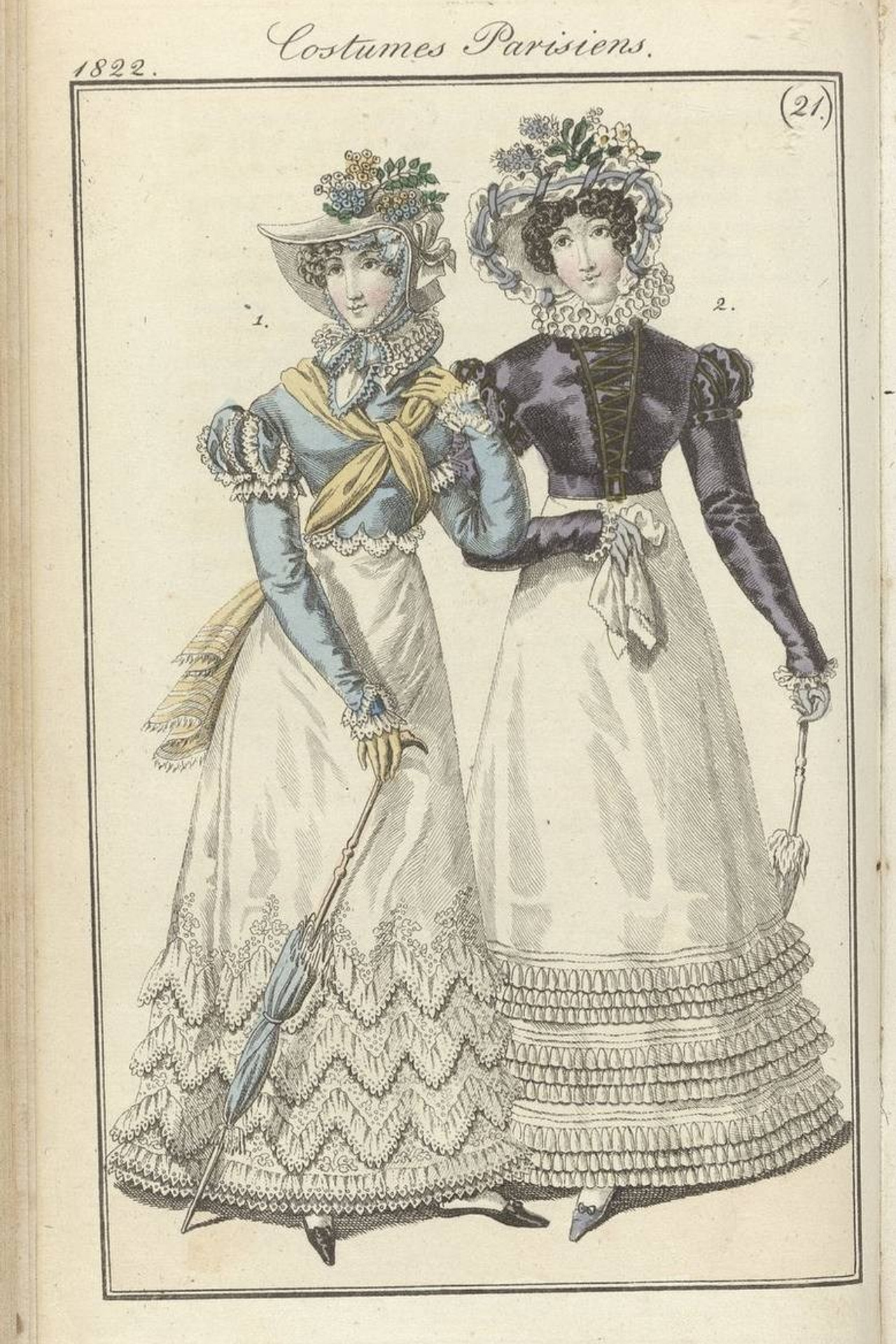

The book that brought together nearly half a century and described almost the whole truth
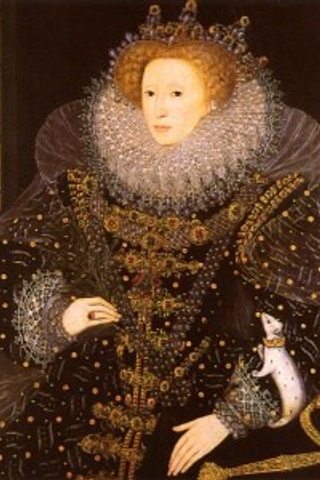


One’s attitude toward the body as an interaction with the world