I have long hesitated to address this topic because, in terms of my own feelings, it always seemed rather trivial—I am quite certain of my stance on the matter, so it didn’t strike me as particularly interesting. It touches upon a vast subject: one’s relationship with the body and its expression in art, and how this reflects one’s entire essence and shapes one’s destiny.
There is so much mediocrity in this world. So much that is merely “given, ” established, and rigid. Modern wisdom dictates that you should “start where you are, with what you already have.” Yet, nothing prevents you from starting anywhere at all. A point constitutes a specific phenomenon only from the perspective of a particular worldview or coordinate system; in reality, however, neither time nor space exists—provided you are consciously or subconsciously free from them.
I often hear people say, “It’s foolish not to make use of what you have.” And when I object—saying I don’t need it, I don’t want it, I don’t want to do it that way, it won’t be of use to me, or it will only push me further in the opposite direction—they invariably reply, “You might not need it, but it’s a way to break through to something greater.” So, here is the answer to that.
This falls into the category of “peace for the sake of war"—or, as the Futurists claimed, “war is the only preventive measure for peace"—an idea suggesting that one can reach the opposite state through a specific path. This is a profound misconception; you can never get a “plus” from a “minus.” I base this on the principle of the power of thought, which involves building a bridge between your current starting point and the point where you wish to be. To make this transition, you must eliminate the space separating the two realities and merge them into one by mentally transporting yourself to your desired destination beforehand. You become what you think about (per the “Law of Attraction”), and it has long been proven that thinking about something with a negative connotation attracts it just as surely as thinking about it with a positive one. Struggle is inherently meaningless because it is unnatural; for this reason, it never yields results. It may produce a merely superficial or nominal effect, but true change occurs from within—it cannot be achieved through the “carrot and stick” approach, compromise, blackmail, or any other form of coercion.
Ultimately, the conclusion is that you can achieve what you want only by being natural and straightforward—by becoming that person right now, rather than testing out a “theory of means” and constructing complex, convoluted schemes to reach a result. (To touch on another point: such schemes always lead to a dead end. Even when you achieve the desired results, you quickly realize they no longer interest you—which makes sense, because the essence lies not in the result itself, but in the process of achieving it; our goal is merely an illusory incentive for movement, for the eternal cycle of life.)
There is a great saying: “You aren’t made a star; you are born one.” You can *become* a doctor, a lawyer, or a dancer, but not a star. Because what lies beneath it all—your nature, your philosophy, your “brand” (a term that originated in the context of applying to universities abroad but has since spread much more widely), that fundamental, innate quality within you—is what truly shapes you. Why is it that a person with a wealthy mindset will always find a way to get rich? Whereas someone with a poverty mindset—even if presented with a thousand opportunities—will remain without means? Look at the world’s greats from the time before they had a name, a calling, or even a life’s work. Even then, they were exactly the same people they are today. (That is precisely how they earned their name.) For your state of being is the very bridge connecting the point of the present to the point of the true future (this is, of course, an allusion to the fact that there are no distinct points, but rather a single continuous line).
So, there are young women who heed the notion that it is “foolish not to make use of what you have” and embark on this path that is doomed to failure. I cannot say it is a direct route to losing oneself, but you certainly betray yourself by engaging in something you inwardly resist (assuming, of course, that you do resist it).
Personally, I do resist—likely because I have an art background and understand how basely the modern world interprets things that actually carry a completely different, lofty, and even sacred meaning. I view the world primarily through the eyes of an artist—a creator—so I care deeply about what my interaction with the world fosters. No matter the potential benefits, if my interaction with the world fails to give birth to something beautiful or great, I reject it—much like poets burning verses that fall short of excellence.
Besides, as I have demonstrated, those benefits are utterly illusory. In the modern world, the “nude” genre is becoming increasingly sought-after. While nudity was the norm in the ancient world, today burst forth due to the scarcity and “forbidden” nature of this fruit, leading to the female body being exposed in ways that are vulgar, tawdry, brazen, and excessively contrived or “creative.” This destroys our perception of beauty and naturalness.
Nowadays, all meanings are being debased and trivialized, and art is dying as a result. We must continue to see beauty and strive for it… Let us examine the evolution of the philosophy of the human body across different eras. At first, it was something commonplace (in the ancient world—the “infancy” of the fashion world—clothing merely accentuated the body’s natural harmony, and femininity was associated with simplicity and practicality).
Later, during the Renaissance, physical beauty was celebrated, yet it was neither treated as something mundane nor strictly forbidden (I consider this the healthiest period in the life of the fashion world). However, one cannot forget how Michelangelo was forced to repaint the Sistine Chapel ceiling, “clothing” the nude figures—figures that, in reality, contained not a hint of indecency. This proves that even then, there was no truly healthy, holistic attitude toward the intimate beauty of the human body.
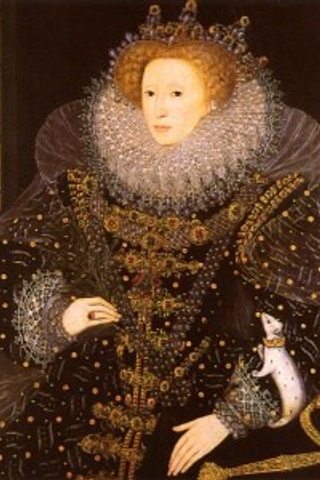
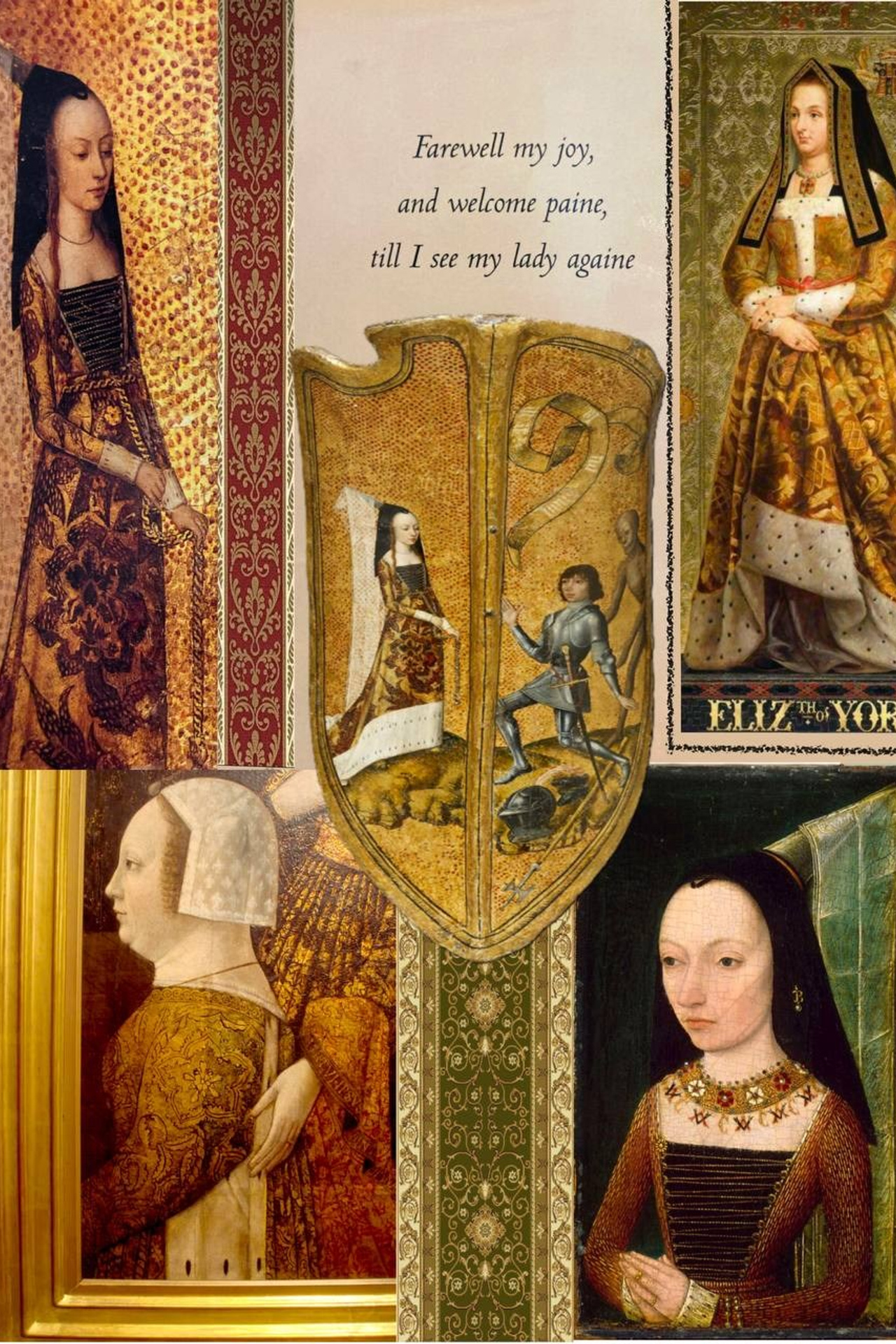
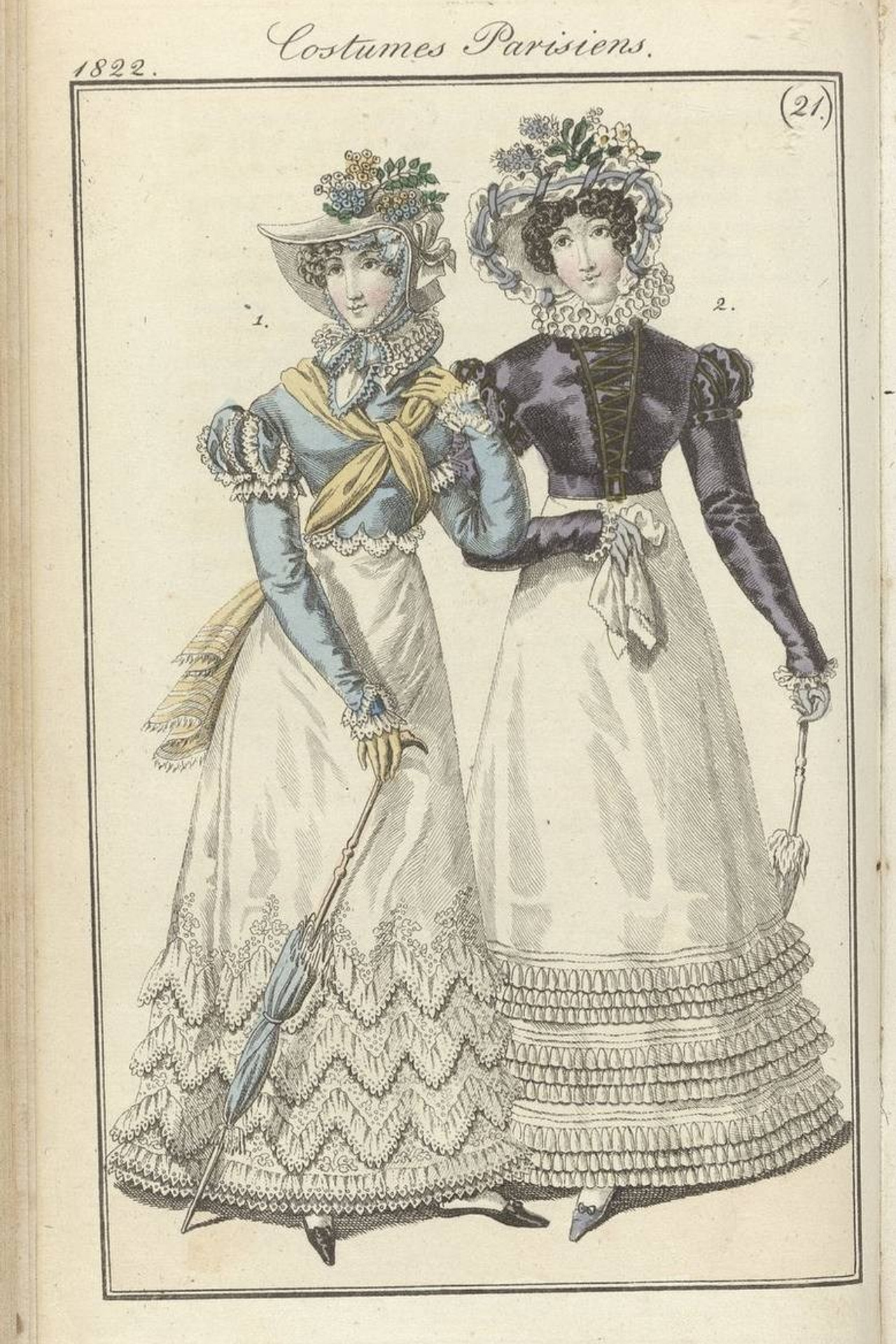
Then, the fashion world entered an “adolescent phase” that lasted for centuries (in fact, it began as early as the Gothic period, when people began feverishly concealing the body). This phase spanned the Empire, Biedermeier, Baroque, and Rococo eras, eventually leading us to something more or less familiar. It was a turbulent journey for fashion, characterized by attempts to mold the human body to fit the illusory ideals specific to each era—whether by exaggerating the forehead and belly, elongating the neck (as in the Gothic period), cinching the waist to extremes, or widening the hips. …“drawing in” the shoulder line, enlarging the overall silhouette, or—in today’s world—lengthening the legs.
In short, the human body has never been viewed as something perfect or canonical; there has always been a desire to “tweak” it here and there. Even today, when the body is concealed, the impulse is not merely to reveal and sexualize it, but to subject it to new concepts of the ideal—concepts that can certainly be described as debased.
A protruding belly was once interpreted as a symbol of fertility; extending the shoulder line with voluminous sleeves signified elegance and refinement; large silhouettes conveyed opulence and formal complexity. None of this desecrated the female body to an extreme degree. In contrast, modern trends—such as the glorification of anorexia, garish makeup, and unnatural, erotically charged poses—resemble a severe pathology within the fashion world. One hopes this will eventually give way to a more balanced perception of female nature (after all, fashion merely follows society, morality, and philosophy; when attitudes toward women change, fashion will reflect that). Yet, we harbor no illusions; we know that trends tend to swing toward opposite extremes. Thus, even if this “sickness” subsides, it will inevitably veer into the opposite extreme. But let us not speculate too far; let us come back down to earth.
Why do all nude models look so shapeless, so “drained"—like a crumpled flower? Why does a random girl off the street often have a more beautiful figure than a nude model? Because such models turn their bodies into objects, into mere tools, into commodities; and the body, like a dirty rag, absorbs all the filth to which it is subjected. I will never tire of saying that just as the mind never truly discards what it absorbs—storing everything, at the very least, in the subconscious—so too does our body (especially the female body) retain the imprint of everything: every sexual encounter, every touch, and everything else it represents to its owner. Therefore, one must be deeply intentional about how one treats it; it should not be squandered on the superficial or, worse, the unpleasant.
And—importantly—art must not be turned into a commercial enterprise.
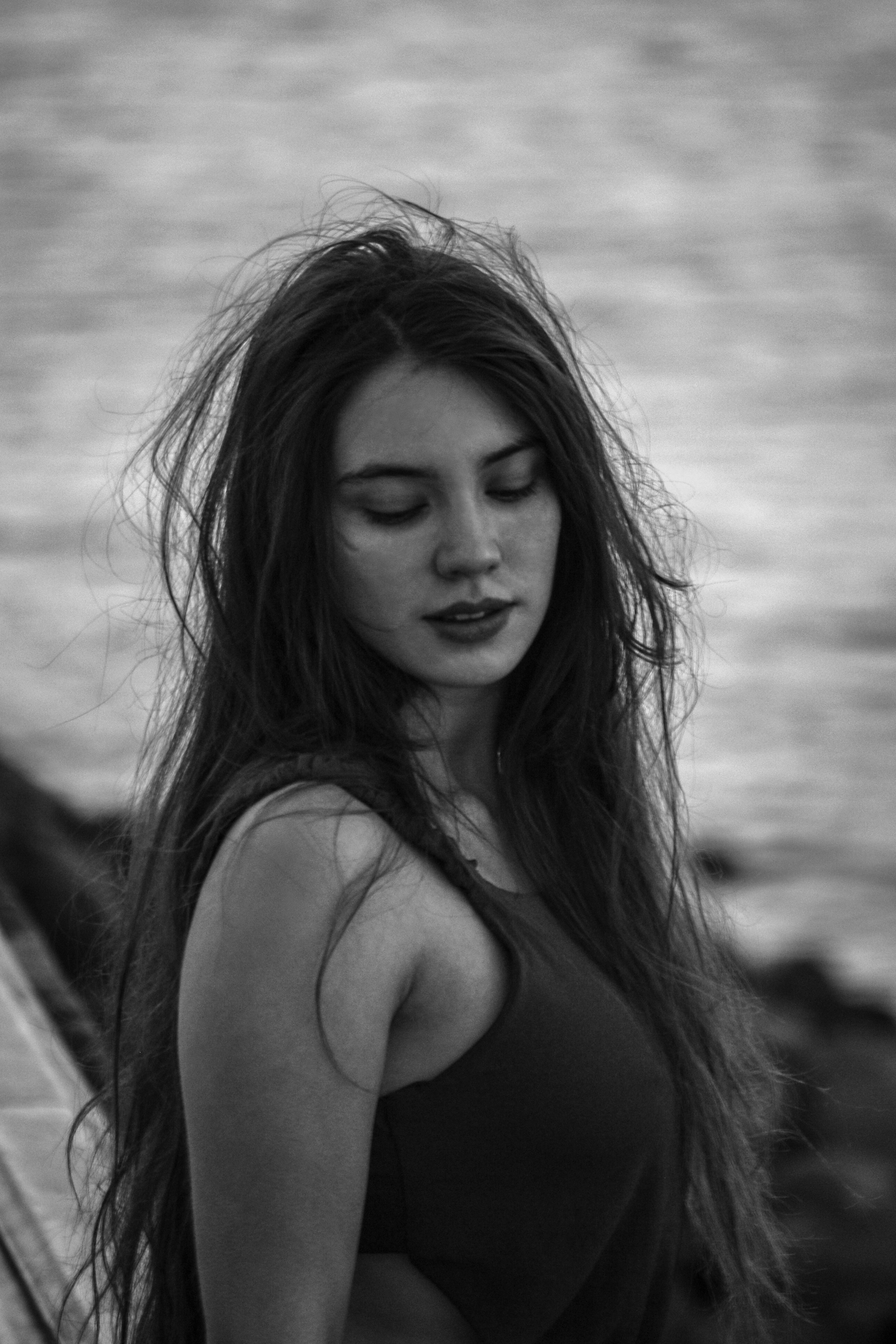
Sometimes photographers I’ve met—who shoot erotic content and know my aversion to erotic photoshoots—suggest I model for other themes instead. Of course, I realize it’s not really about the theme itself, but rather the interpretation of it. You know, even the most innocent subject can be presented in a vulgar way, whereas a highly erotic theme can be handled without any subjects — provided one doesn’t simply read it as erotica; one need only recall *The Clothed Maja* and *The Nude Maja* and smile. I immediately reject proposals from photographers with even the slightest inclination toward erotica, simply because I see that if that intention exists from the start, it becomes one of the primary meanings the photographer invests in the shoot. An artist never views the naked human body as an end in itself. Rather, it is a method of expressing something more sublime, elusive, ephemeral, and artistic—something that, in any case, could be conveyed without nudity.
The only person I ever posed for in the nude—a singular photographer in my life—treats the body naturally, spiritually, divinely, and yet, at the same time, quite matter-of-factly. With him, I felt—in the truest sense of the words—like a woman, a muse, a vision of beauty, the embodiment of love; at times, a symbol of simple comfort; at others, of sheer fragility. Yet it is all sincere and pure—devoid of that nauseating undertone that seems to permeate the photography world to some degree almost everywhere else. The problem is that once a young woman begins participating in such photoshoots, she risks being perceived primarily as a model of that specific sort…
The problem is that once a young woman starts doing that kind of photoshoot, she begins to be viewed—potentially—as a model specifically for that type of work, and the stream of such invitations becomes endless.
After all, if even world-class runway models struggle to break into high fashion, what hope is there for a mere photo model? If you want to build a career specifically in catalog modeling, you need to pursue that path deliberately from the very start; only then do you stand a chance of succeeding where others, having succumbed to temptation, fall by the wayside. You must also clearly assert your stance to the world. As long as you simply accept whatever comes your way, you will never get what you actually need. You simply have to set your course, and circumstances will make way for you.
Articles


The book that brought together nearly half a century and described almost the whole truth