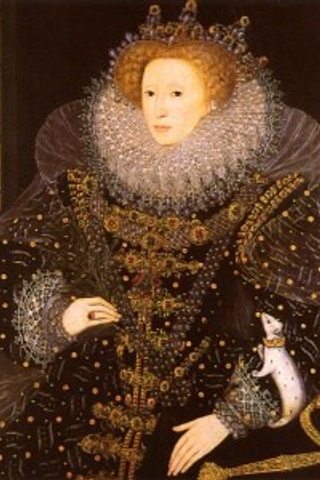
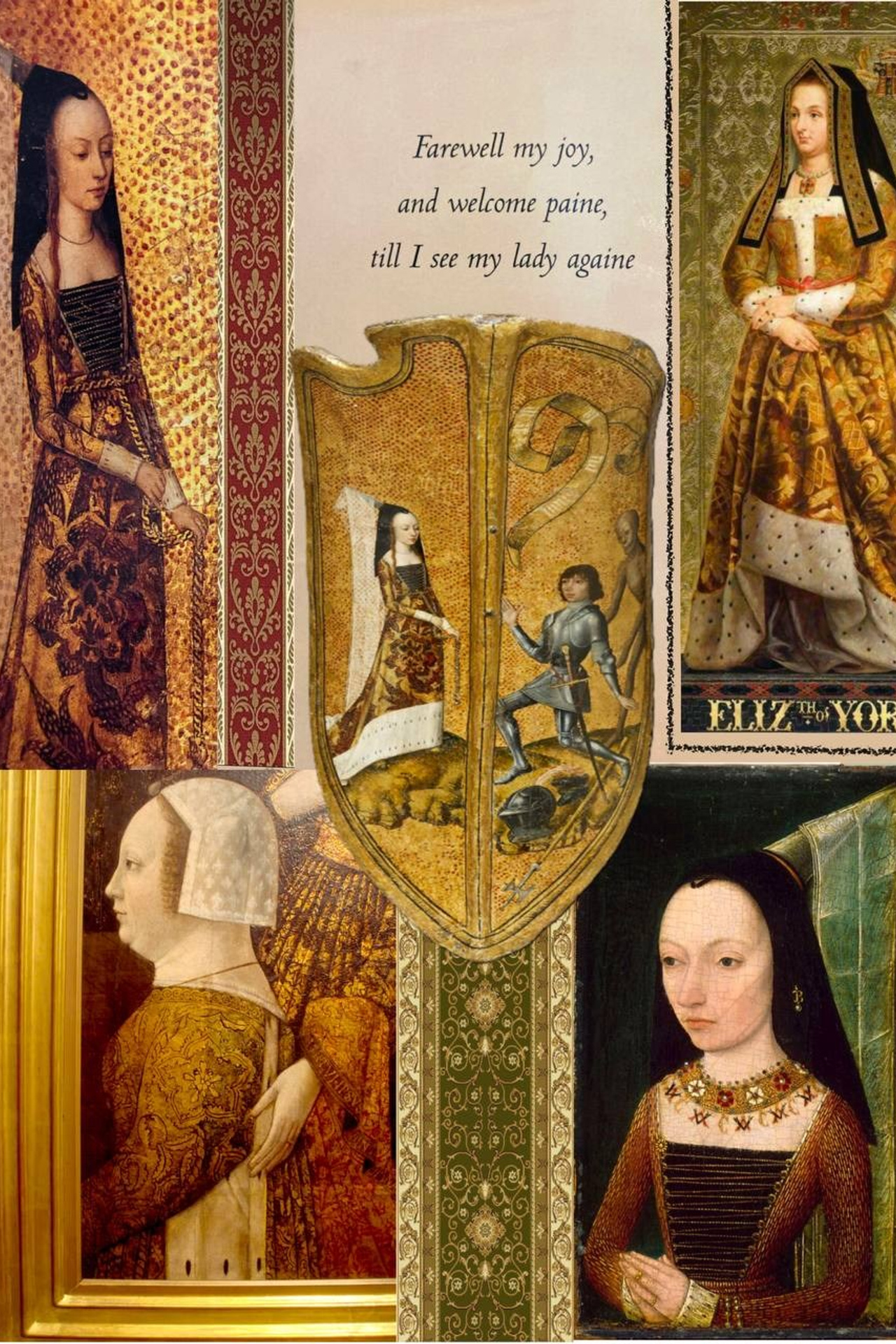
Portrait of the owner of the costume.
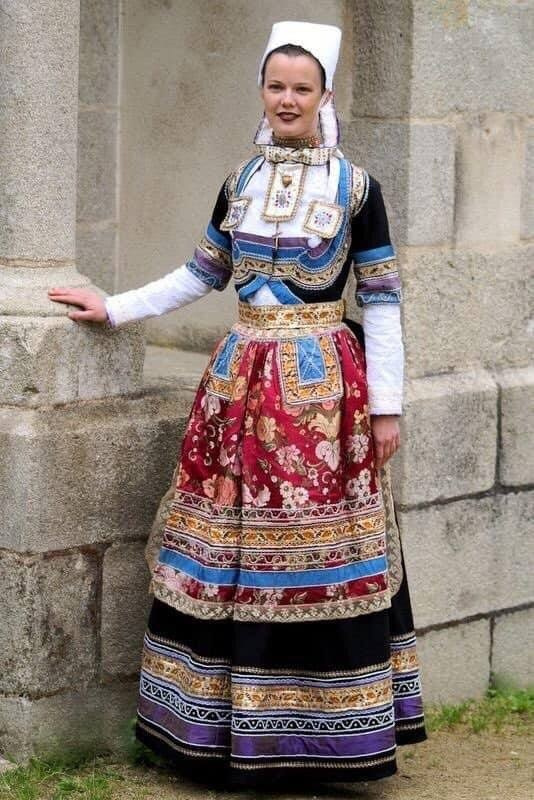
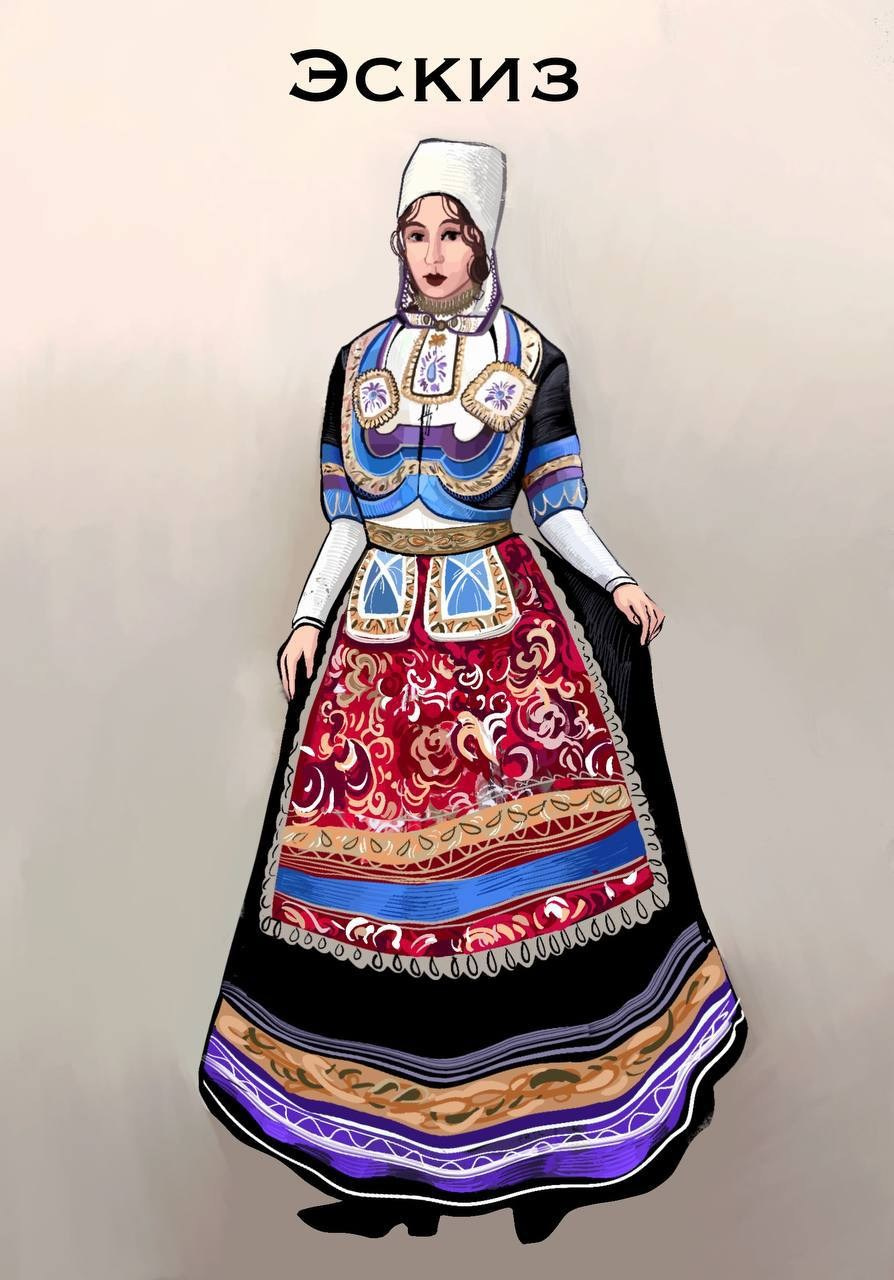
The costume most likely belonged to a wealthy, high‑status French bride from the city of Quimper in Brittany. This can be inferred, firstly, from the fact that the costume features an abundance of dense and expensive fabrics.
Secondly, it has no pockets, which is a sign of an unmarried girl.
Thirdly, one can notice that the skirt is supported by a gold belt, which is typical of brides’ costumes, and the shirt, which is the first layer in the costume, is made of white velvet. A simple closed headdress of a cylindrical shape also indicates that the girl is getting married, since unmarried girls wore only bows with fancy ribbons.
Components of the costume:
· shirt
· dress
· skirt
· belt
· cap (kuaf)
· shoes.
Features
The Breton costume is a style of clothing worn by the Bretons (residents of Brittany, a Celtic region of France) as formal or festive attire. Women wear long dresses with white aprons, lace collars, and lace headwear.
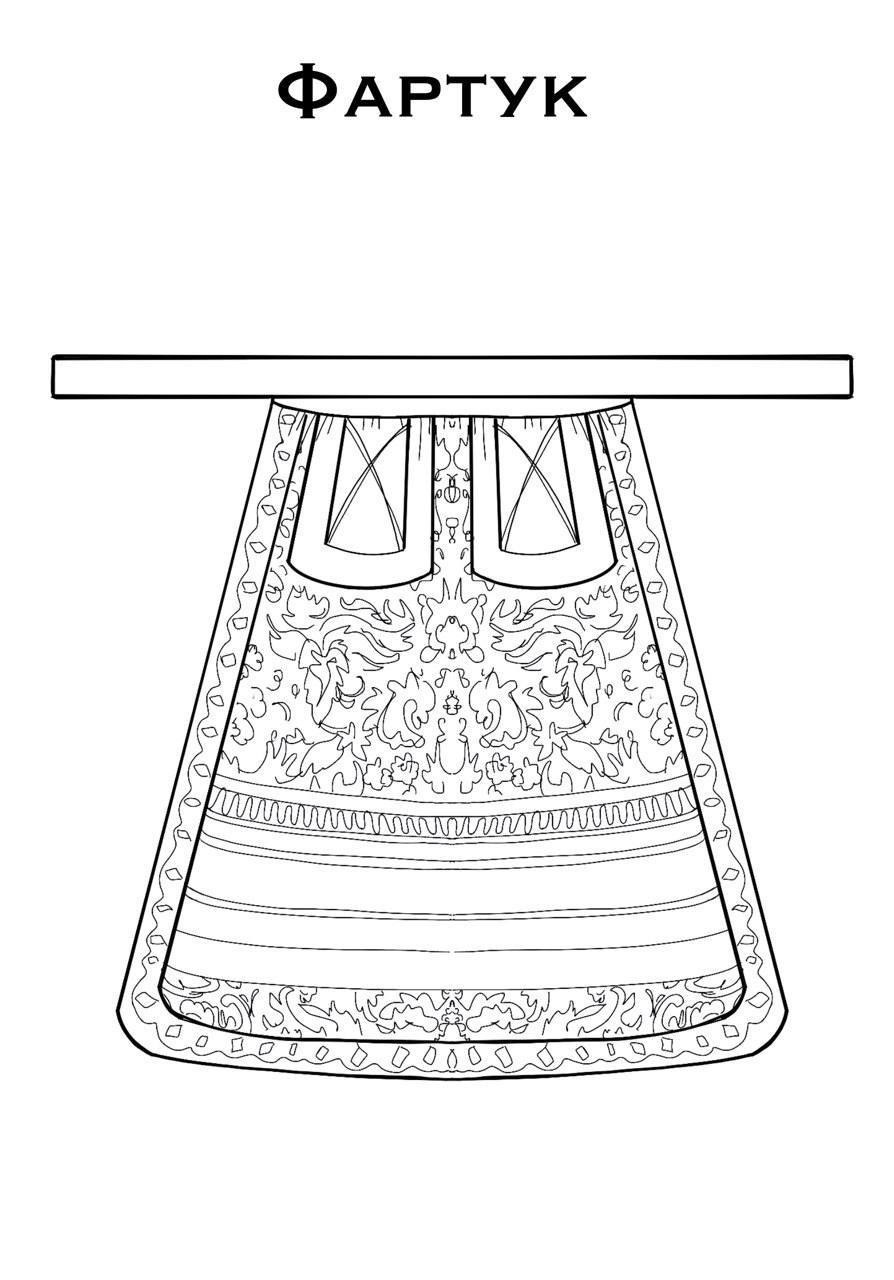
A women’s costume consists of several pleated petticoats, long aprons, or bibs, in the same colour as the dresses, and shawls with fringe along the edges. Girls’ aprons are always very simple, and they have no pockets. However, those worn by adult women are made of different materials and differ from each other in shape; some are made of silk, while others are even made of expensive brocade.
Women’s headdresses are quite original and may even seem grotesque. In the old days, Breton women twisted strands of hair into bundles, wrapped them with ribbons, and arranged them in the shape of a crown on their heads. A cap with a projection at the back, tied in front like a neckerchief, was worn on top. If a woman became a widow, she would take off this headdress and cover her head and shoulders with a black triangular scarf.
The bride’s outfit consists of three different dresses: the first is made of white velvet with a front made of moiré fabric, the second is made of purple velvet, and the third is made of golden velvet, with embroidered sleeves and a front made of the same material. The bride’s belt, embroidered with gold, supports the multitude of magnificent skirts, which allows the stockings decorated with gold watches to be seen.
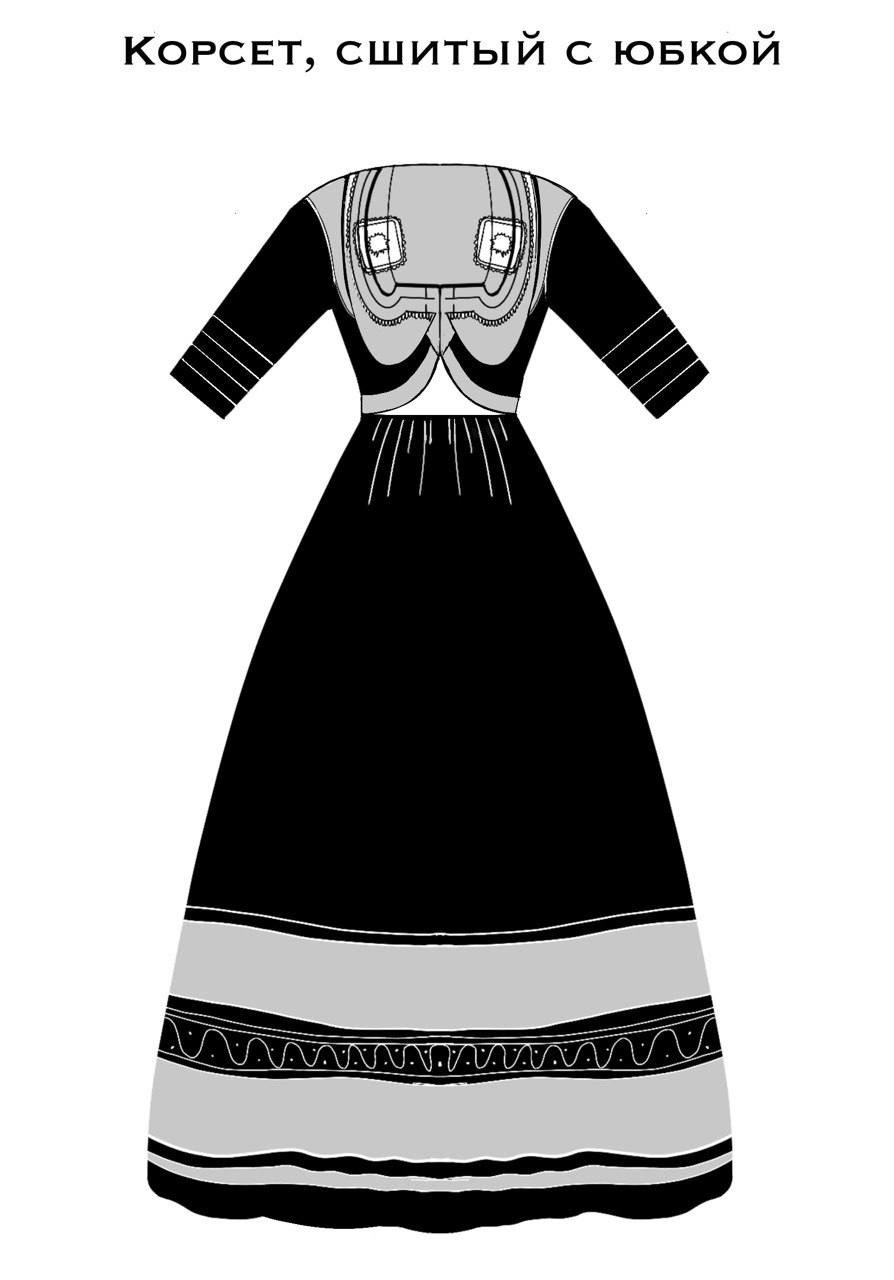
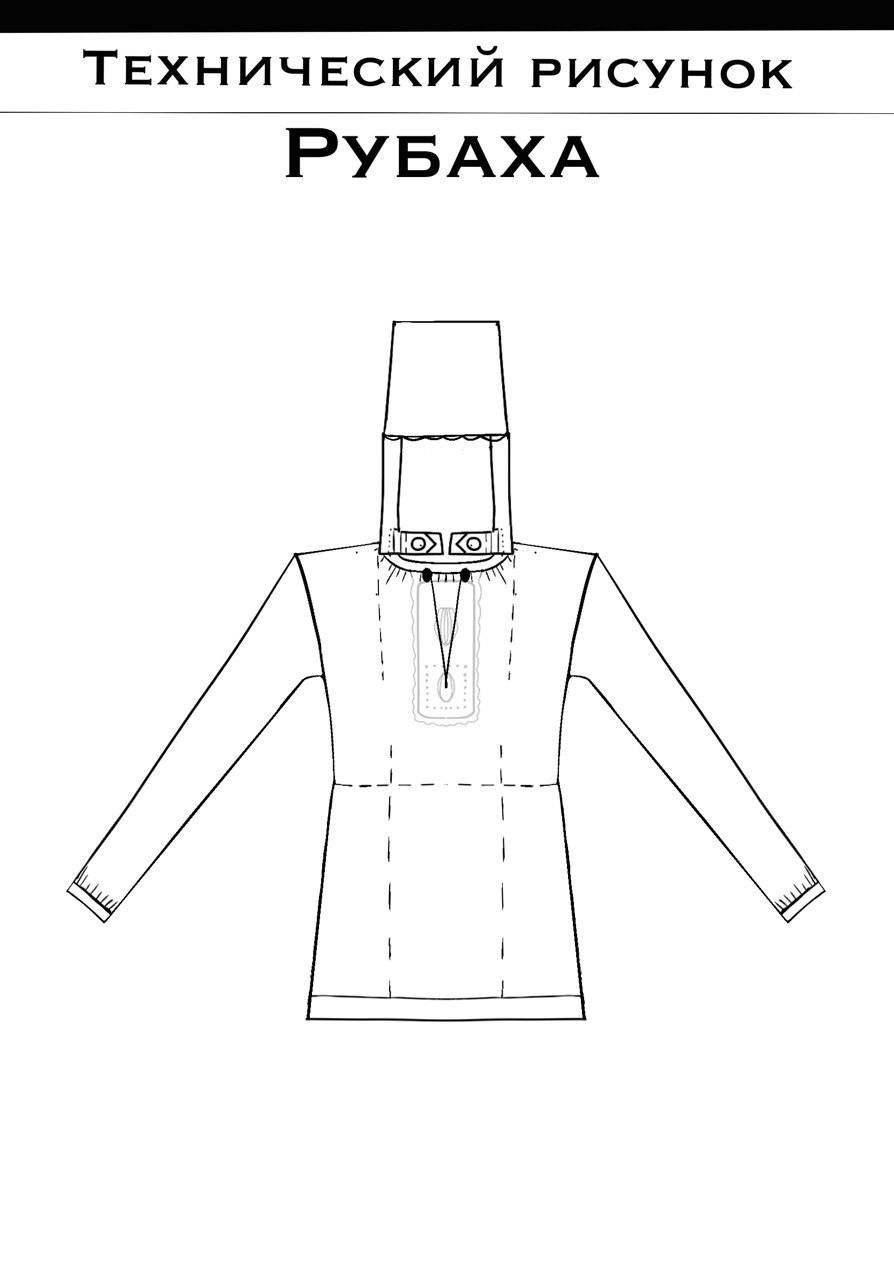
The shirt was worn under the dress and could be made of various materials, including velvet. The dress. In Auvergne, Burgundy, and especially in Brittany, the cuffs on the sleeves of the bodices and bodices of dresses were decorated with trim in the form of a wide border, or they were made entirely from fabric of a different color. In the Breton Finistère, the wide cuffs of the sleeves of the black velvet bodice were densely covered with red‑and‑gold embroidery. This corset was not laced at the top, so that the equally ornate embroidery on the chest panel would be visible underneath.
On the Brittany peninsula, they loved colorful red skirts; they were gathered at the sides, revealing a second skirt. Aprons with bibs were also typical of Brittany.
In the northwest of France, the corset and short skirt worn by French women could be solid‑colored or in contrasting colors: a black corset (or bodice of a dress) was worn with a striped skirt, while a patterned one was worn with a solid-colored skirt. The costume was complemented by silk aprons, often also striped. Stripes were a very common pattern on French skirts and aprons. At the same time, the color schemes of French women’s costumes in any region were characterized by soft, muted combinations.KuafKuaf is a headdress. Kuafs differed in size and complexity of design; they were white and always made of lace (sometimes lace was replaced with cotton fabric decorated with embroidery). ShoesShoes were usually unobtrusive, in dark colors, and convenient for wearing during holidays and celebrations.
Articles

One’s attitude toward the body as an interaction with the world



The book that brought together nearly half a century and described almost the whole truth